
How to Clean Outdoor Furniture: A Material-by-Material Guide
Learning how to clean outdoor furniture starts with identifying the material and choosing a cleaner that will not damage its finish. Mild soap and lukewarm water work for many patio furniture frames and fabrics, but powder-coated aluminum, teak, resin, wicker, sling fabric, and cushions each have different care requirements.
In Sonoma County, outdoor furniture can collect pollen, dust, food stains, sunscreen, bird droppings, and moisture throughout the year. Regular care helps protect its frames, finishes, and fabrics.
What Should You Use to Clean Outdoor Furniture?
For routine patio furniture cleaning, start with mild soap, lukewarm water, and a soft cloth or soft-bristle brush. This combination removes ordinary dirt without harsh solvents or abrasive tools.
Gather these basic supplies before you begin:
- Bucket of lukewarm water
- Mild dish soap or manufacturer-approved cleaner
- Microfiber cloths or soft sponges
- Soft-bristle brush or toothbrush
- Vacuum with a brush attachment
- Garden hose with a gentle spray setting
- Clean towels and protective gloves
Check the manufacturer’s care instructions before using bleach, vinegar, baking soda, solvents, or a pressure washer. A cleaner that is safe for one material may damage another.
How to Clean Outdoor Furniture in Six Steps
The best way to clean outdoor furniture is to begin with the gentlest method and increase the cleaning strength only when the material permits it.
- Read the care label. Confirm the frame, finish, and fabric type, including whether cushion covers are removable.
- Remove loose debris. Take off cushions, then vacuum or brush away pollen, leaves, cobwebs, and dry dirt before adding water.
- Test the cleaner. Apply a small amount to a hidden area, let it dry, and check for fading or spotting.
- Wash gently. Work from the top down with a soft cloth, sponge, or brush. Clean seams, joints, and crevices carefully.
- Rinse thoroughly. Remove all soap residue with clean water to prevent streaks and new buildup.
- Dry completely. Stand cushions on their sides and allow air to circulate. Never cover or store damp furniture.
How to Clean Outdoor Furniture by Material
Powder-Coated Aluminum and Metal Frames
Wash powder-coated aluminum with mild soap and water using a soft cloth or sponge. Rinse and dry the frame, including joints where water may collect.
Avoid abrasive pads, metal brushes, acetone, mineral spirits, and lacquer thinner. Telescope Casual, one of the brands carried by Sonoma Backyard, recommends regular cleaning to prevent buildup on powder-coated aluminum.
If you notice a chip or scratch, consult the manufacturer or retailer about an appropriate touch-up product before corrosion begins.
Resin and Marine-Grade Polymer Furniture
Use mild soap and water with a soft sponge or brush. Rinse thoroughly and let the furniture air-dry. A soft toothbrush can reach textured surfaces and tight corners.
Do not assume that bleach is safe for every resin color. Bleach may be appropriate for certain white products, but it can fade colored surfaces. Use it only when the manufacturer specifically recommends it.
Synthetic Wicker Furniture
Vacuum or brush between the woven strands. Wash with mild soap and lukewarm water, rinse gently, and allow the furniture to dry with plenty of airflow.
Avoid hard scrubbing and high water pressure. Both can loosen, stretch, or damage woven material. Natural wicker is more sensitive to moisture than synthetic outdoor wicker, so confirm the material before washing it.
Teak and Other Wood Furniture
Brush away debris before washing wood with mild soap and water. Work with the grain, rinse without saturating the wood, and let it dry completely.
Teak naturally develops a silver-gray patina as it weathers. To retain a warmer color, use products made specifically for teak. Avoid metal brushes and aggressive pressure washing, which can damage the grain.
Outdoor Cushions and Sling Fabric
Brush or vacuum dry dirt before applying water. Use a manufacturer-approved cleaner or mild soap and lukewarm water. Rinse thoroughly and let the fabric air-dry.
Do not remove or machine-wash cushion covers unless the care label allows it. Cushion construction varies, and some covers may shrink or become difficult to reinstall.
Some performance fabrics permit diluted bleach for mildew, but bleach is not safe for every cushion. Follow the instructions for your fabric and protect nearby furniture, plants, and non-colorfast materials.
How to Remove Common Outdoor Furniture Stains
Treat spills promptly. The longer residue remains, the harder it may be to remove.
- Pollen and dust: Vacuum or brush them away while dry. Adding water first can turn pollen into a stain-producing paste.
- Food and drink spills: Blot liquids rather than rubbing them. Wash the area with mild soap and water, then rinse it completely.
- Grease and sunscreen: Sprinkle cornstarch or another manufacturer-approved absorbent onto fresh oil. Remove it carefully before cleaning with mild soap.
- Bird droppings: Let the residue soften with water, remove it gently, and wash the area with soap and water. Avoid scraping with a metal tool.
- Mold and mildew: Follow the manufacturer’s instructions, rinse thoroughly, and allow the entire area to dry.
- Tree sap: Use a product approved for the furniture material. Test it in a hidden location before treating a visible surface.
Can You Pressure-Wash Outdoor Furniture?
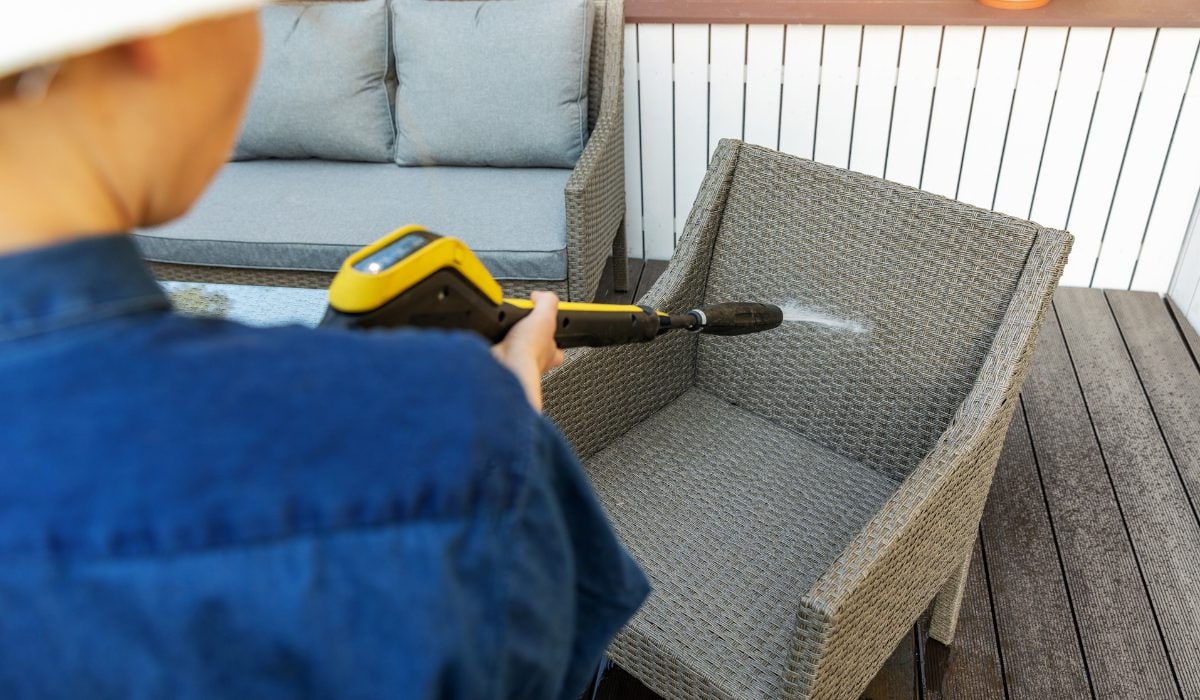
Do not pressure-wash furniture unless the manufacturer permits it. High pressure can strip powder coating, raise wood grain, unravel wicker, force water into frames, and damage fabric.
A garden hose is safer for most cleaning. If pressure washing is approved, use the lowest effective pressure, a wide spray pattern, and the manufacturer’s recommended distance.
How Often Should You Clean Patio Furniture?
Brush or wipe down frequently used furniture every few weeks and clean spills promptly. Deep-cleaning at the beginning and end of the main outdoor season also creates an opportunity to inspect frames, hardware, slings, and cushions.
North Bay conditions can change the schedule. Spring pollen may require more frequent dry dusting, summer entertaining can lead to food and sunscreen stains, fall leaves collect in crevices, and winter moisture makes complete drying and breathable covers especially important.
Store clean, dry cushions in a protected location. Use a properly fitted, breathable cover only after the furniture has dried.
Keep Your Outdoor Furniture Ready to Enjoy
Regular cleaning helps prevent buildup from wearing down finishes, settling into fabric, and collecting around joints. Start gently, follow the instructions for each material, and address spills early.
If your current pieces are cracked, heavily corroded, waterlogged, or no longer comfortable, Sonoma Backyard can help you compare outdoor furniture designed for patios throughout Sonoma County and the North Bay. Visit our Cotati showroom to see materials, seating styles, and care-friendly options in person.
Frequently Asked Questions About Cleaning Outdoor Furniture
What is the best cleaner for outdoor furniture?
For most routine cleaning, use mild soap and lukewarm water. Check the manufacturer’s instructions before applying stronger cleaners to wood, metal, resin, wicker, or fabric.
Can you use vinegar to clean outdoor furniture?
Vinegar may work on certain materials, but it is not a universal cleaner. Check the care instructions and test diluted vinegar in a hidden area first.
Can you pressure-wash patio furniture?
Only pressure-wash patio furniture when the manufacturer permits it. A soft brush and garden hose are safer for most frames and fabrics.
How do you clean white outdoor furniture?
Start with mild soap, lukewarm water, and a soft brush. Use bleach only when the manufacturer confirms it is safe for that white material.
How can you keep outdoor furniture clean longer?
Brush away pollen and debris regularly, clean spills promptly, store cushions when they are not in use, and use breathable furniture covers when appropriate. Always allow furniture and fabric to dry completely before covering or storing them.
